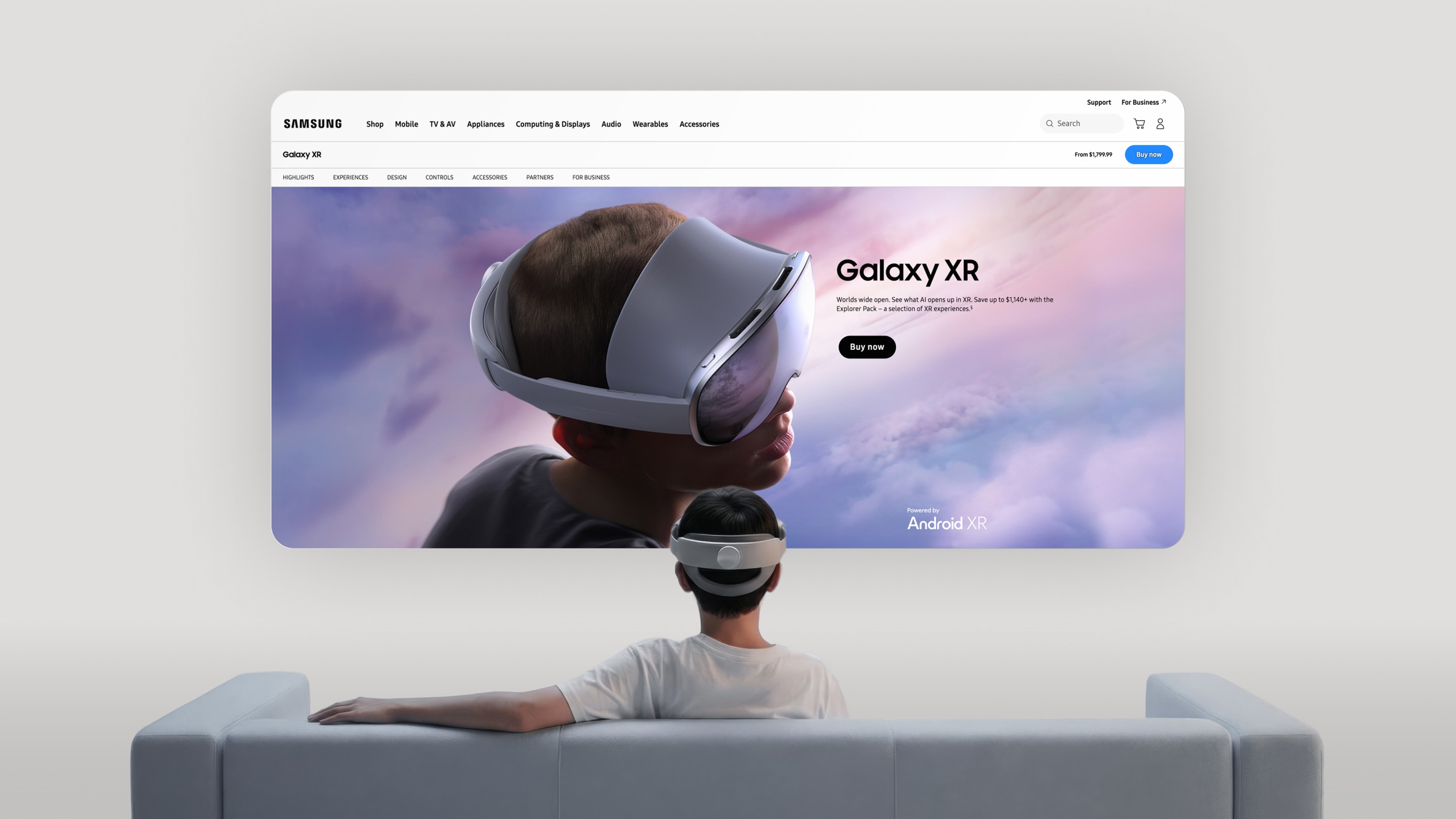
Defining the First User Experience for Samsung’s First XR Headset
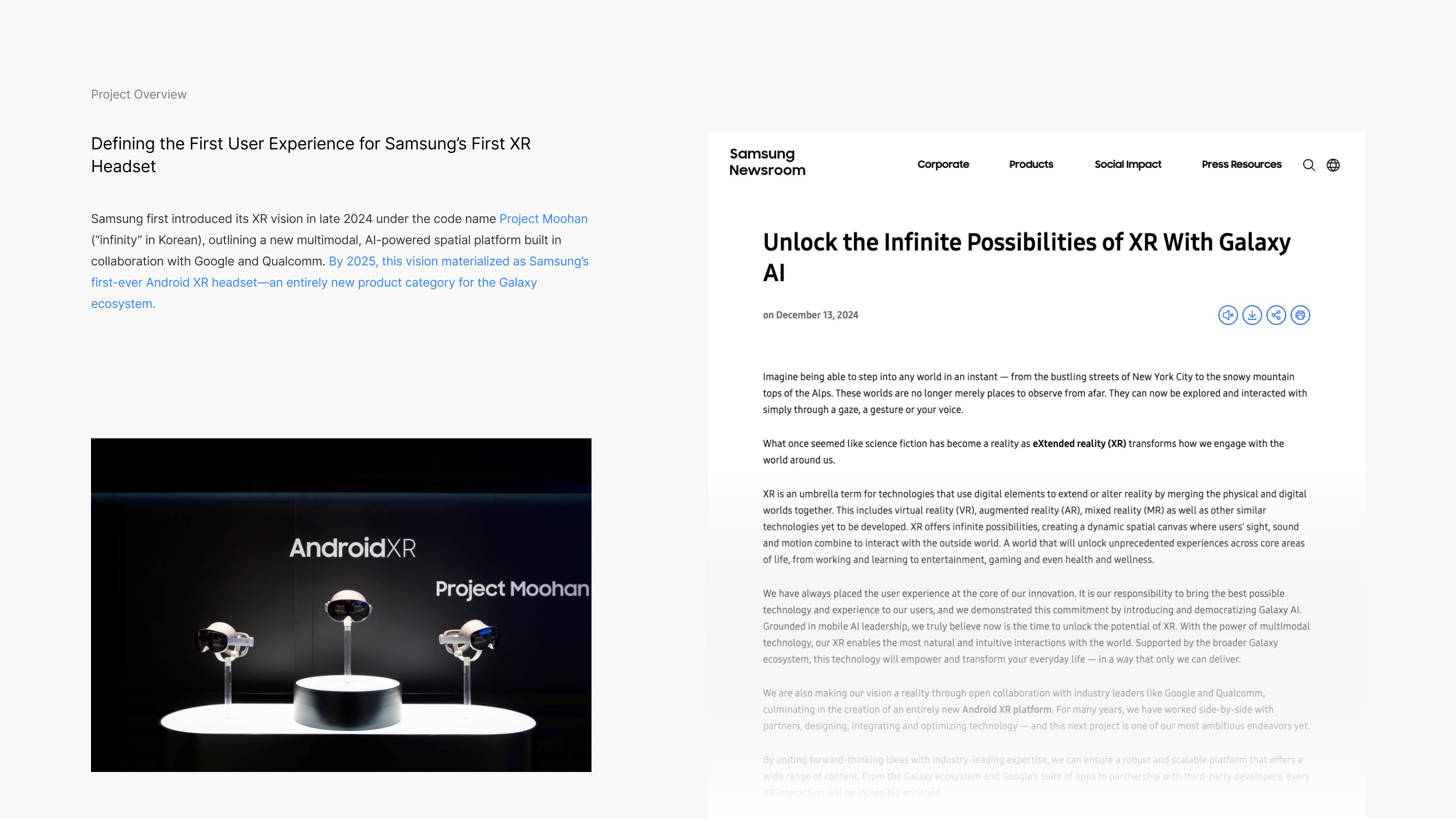
Project Overview
Defining the First User Experience for Samsung’s First XR Headset
Samsung first introduced its XR vision in late 2024 under the code name Project Moohan (“infinity” in Korean), outlining a new multimodal, AI-powered spatial platform built in collaboration with Google and Qualcomm. By 2025, this vision materialized as Samsung’s first-ever Android XR headset—an entirely new product category for the Galaxy ecosystem.
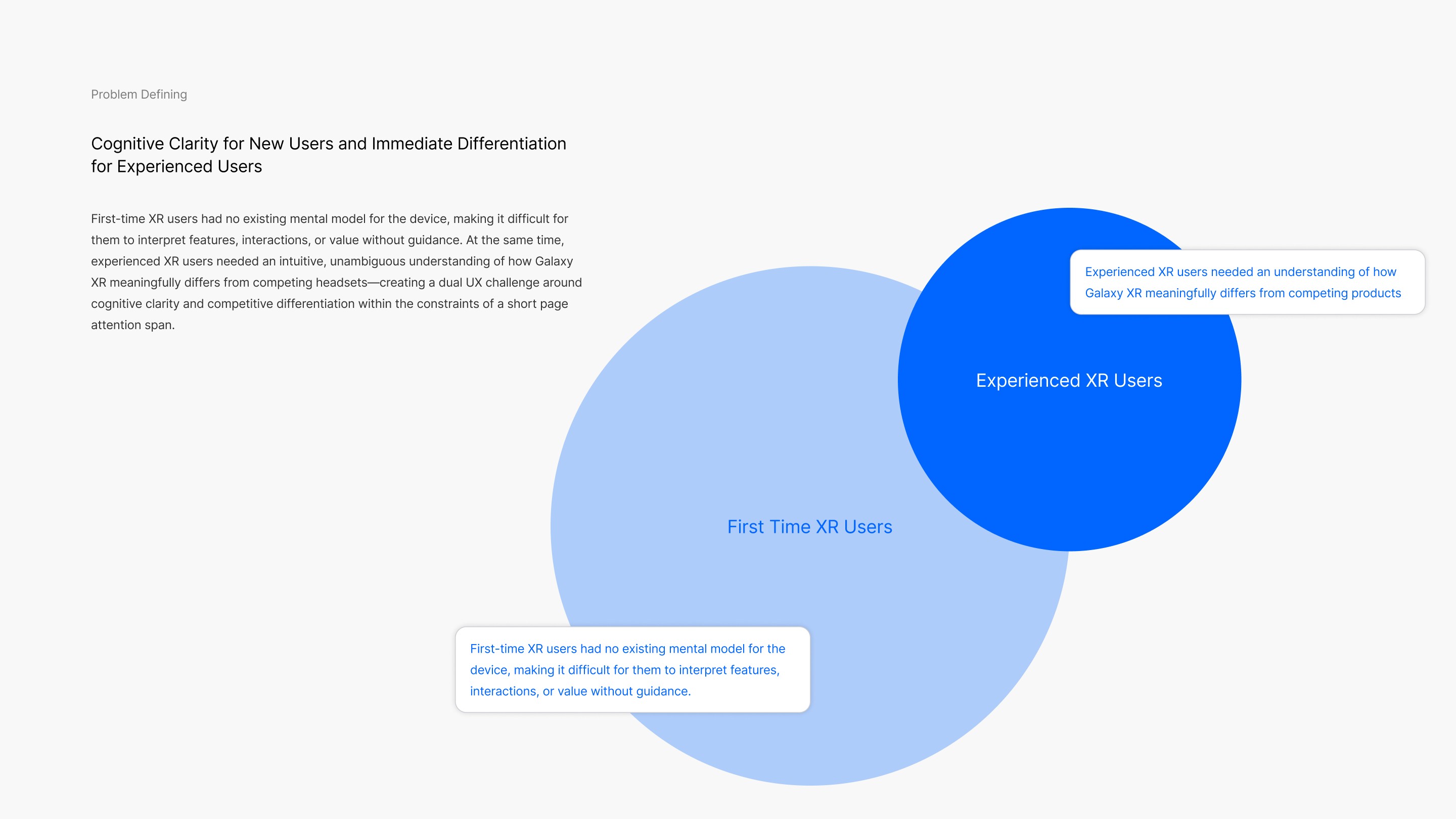
Problem Defining
Cognitive Clarity for New Users and Immediate Differentiation for Experienced Users
First-time XR users had no existing mental model for the device, making it difficult for them to interpret features, interactions, or value without guidance. At the same time, experienced XR users needed an intuitive, unambiguous understanding of how Galaxy XR meaningfully differs from competing headsets—creating a dual UX challenge around cognitive clarity and competitive differentiation within the constraints of a short page attention span.
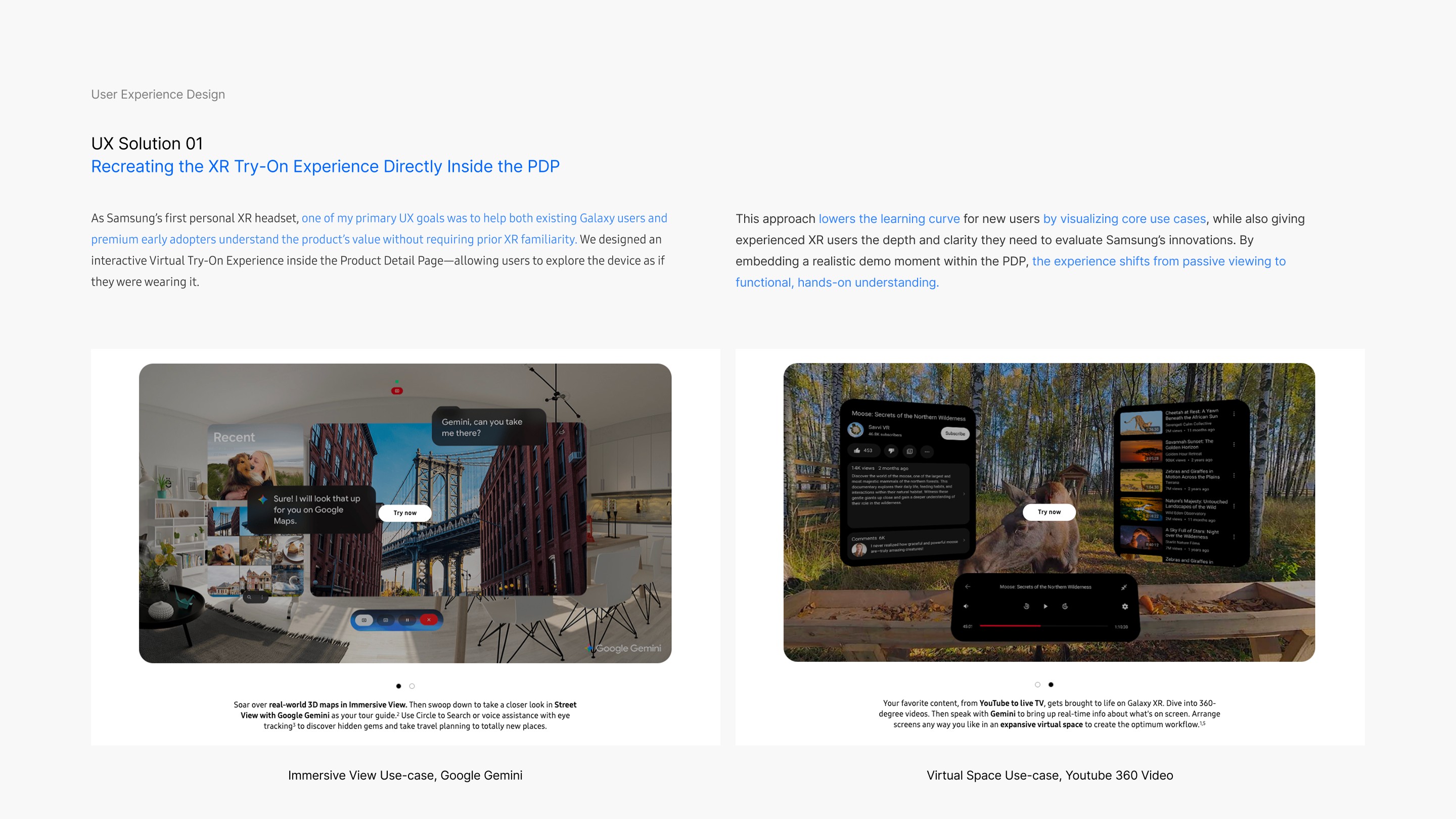
UX Solution 01
Recreating the XR Try-On Experience Directly Inside the PDP
As Samsung’s first personal XR headset, one of my primary UX goals was to help both existing Galaxy users and premium early adopters understand the product’s value without requiring prior XR familiarity. We designed an interactive Virtual Try-On Experience inside the Product Detail Page—allowing users to explore the device as if they were wearing it.
This approach lowers the learning curve for new users by visualizing core use cases, while also giving experienced XR users the depth and clarity they need to evaluate Samsung’s innovations. By embedding a realistic demo moment within the PDP, the experience shifts from passive viewing to functional, hands-on understanding.
XR Try-On Experience 01, Immersive View Use-case
XR Try-On Experience 02, Virtual Space Use-case
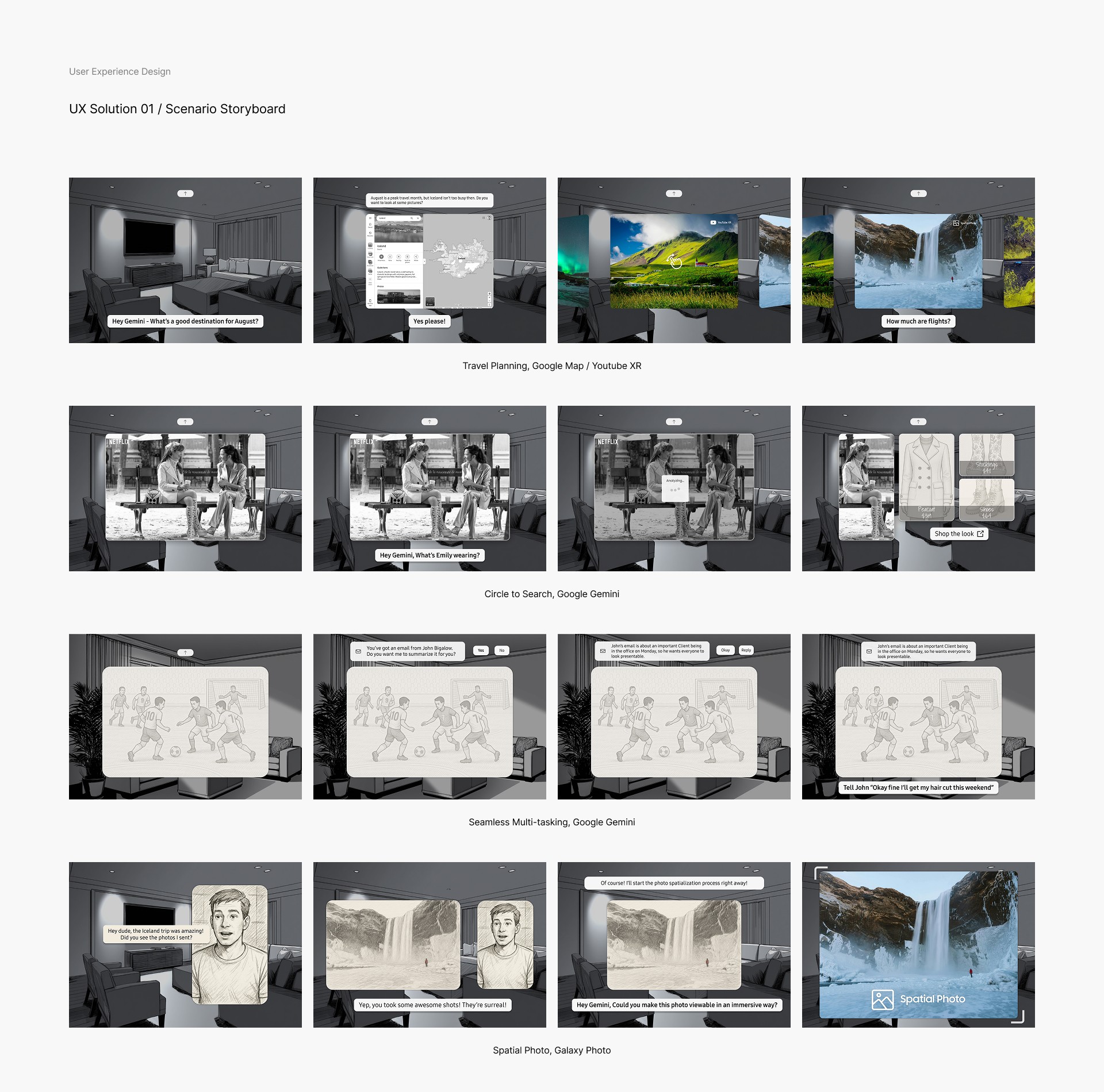
XR Try-On Experience, Scenario Storyboarding
UX Solution 02
Using a Two-Step Parts Breakdown to Clarify Product Architecture
Many users—especially those new to XR—struggled to understand the physical structure of the headset, so I designed a two-step breakdown: a scroll interaction that introduces the full hardware layout, followed by a functional breakdown that links each component to its purpose.
This progressive reveal reduces cognitive load, highlights brand’s engineering strengths, and helps users evaluate Galaxy XR with far greater clarity and confidence.
UX Solution 03
Balancing Structural Logic Flow and Seamless Content Delivery
As the amount of product content increased, we faced a fundamental UX challenge: delivering more information while users’ Time Spent on Page continues to decline. This required balancing two UX perspectives—using a structural lens to define the high-level information hierarchy, and a macro lens to explore component designs that present essential content without disrupting the vertical reading flow.
After evaluating multiple module options, I selected an Expandable Carousel, which preserves scroll continuity while enabling deeper exploration on demand, creating a scalable and intuitive content architecture.
Final Design
Built to Support Both First-Time and Experienced XR Users
The final design provides a simple, approachable path for users new to XR, while still offering the detail that experienced users expect when evaluating a device. Through clear demos, straightforward hardware explanations, and flexible content modules, the experience helps both groups understand the product in a way that feels direct and easy to follow.
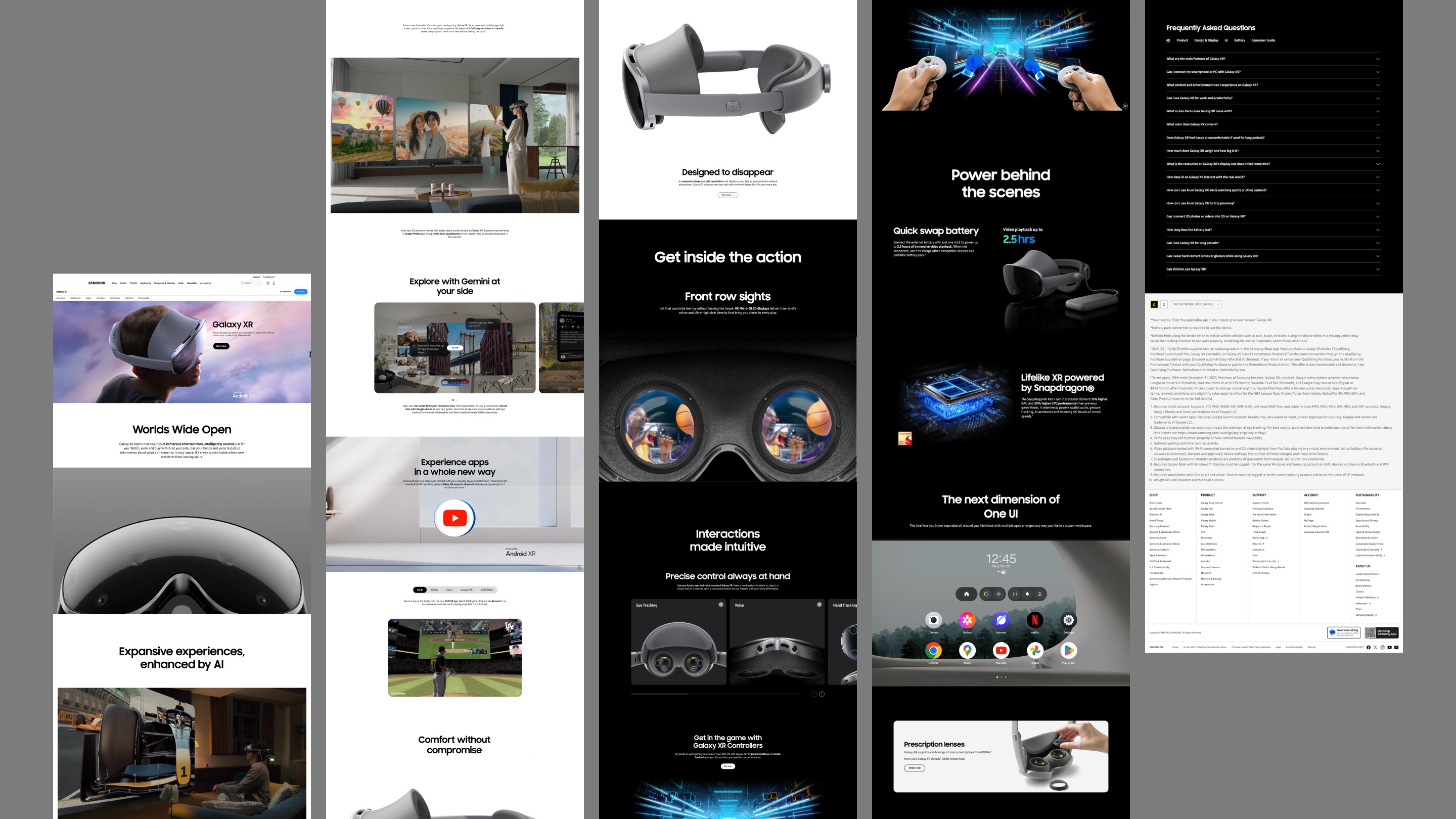
Samsung Galaxy XR Product Detail Page (Web)
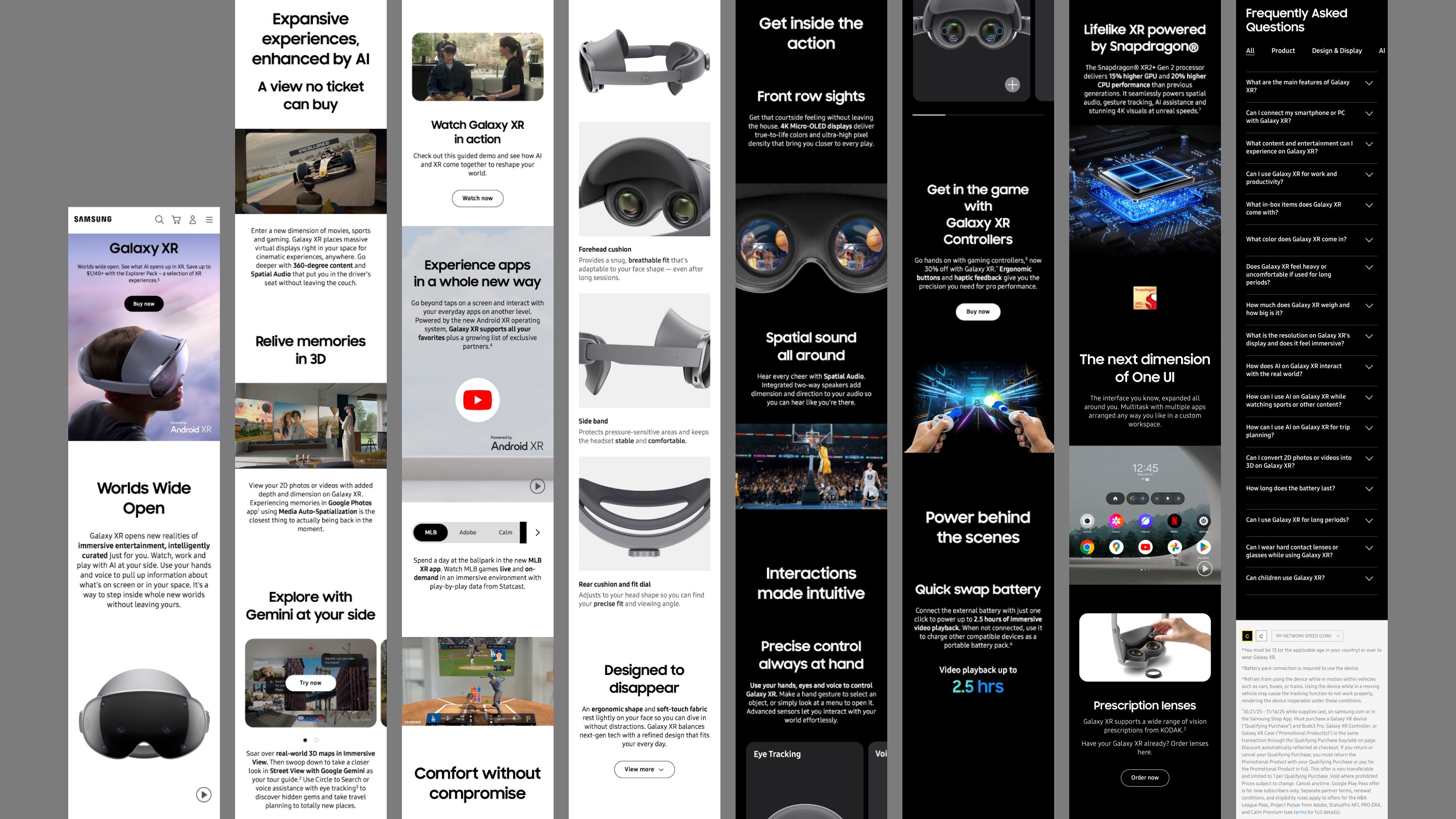
Samsung Galaxy XR Product Detail Page (Mobile)